Anti-Doping in Sports Law: National and International Regulations
27 Mart 2026


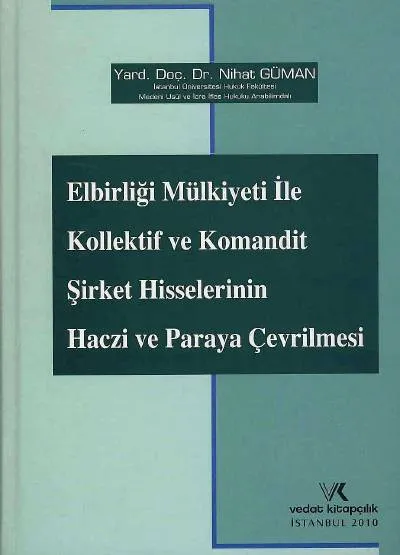
Authors: Sports Law Department, Dr. Nihat Güman, Atty. Mustafa Şahin
Introduction
Sports activities are not only arenas where physical performance is displayed, but also organizations subject to legal regulations requiring the protection of equal competition, integrity, and the principles of fair play. The imposition of disciplinary sanctions when athletes violate the rules of the game aims to preserve the order forming the foundation of sports law. Within this framework, the fight against doping emerges as one of the most sensitive areas of sports law. Doping is not limited to the use of prohibited substances aimed at enhancing performance; rather, it is considered a multifaceted legal violation that undermines the integrity of sport.
In classical legal systems, liability is generally based on fault. However, in order to ensure the effectiveness of anti-doping efforts, the principle of strict liability has been adopted as an exception to this rule. According to this principle, where a prohibited substance is detected in an athlete’s sample, an anti-doping rule violation is deemed to have occurred regardless of whether the athlete is at fault. Nevertheless, fault plays a significant role in determining the type and duration of the sanction. This structure demonstrates that anti-doping law establishes both an objective and individualized sanctioning regime.
The anti-doping system is conducted internationally by the World Anti-Doping Agency (“WADA”), and the World Anti-Doping Code (“WADC”) constitutes the fundamental normative text in this field. National federations and anti-doping organizations shape their own regulations in accordance with this Code.
Doping is defined as the use of prohibited substances or methods to artificially enhance athletes’ performance or the violation of anti-doping rules.
II. Anti-Doping Rule Violations
According to the WADC, doping is not limited solely to the use of prohibited substances. The relevant provisions of the Code regulate in detail the conduct constituting anti-doping rule violations. These include the presence of a prohibited substance in an athlete’s sample, use or attempted use of a prohibited substance or method, refusal to submit to sample collection, violations of whereabouts obligations, tampering with the doping control process, possession of prohibited substances, trafficking or administration thereof, and assisting such acts. This regulation demonstrates that the anti-doping system intervenes not only in analytical findings but also in all organizational and behavioral dimensions of doping.
Participation in competitions creates a contractual relationship between the athlete and the relevant sports organization. Within the scope of this relationship, the athlete accepts various obligations, including doping controls. Accordingly, anti-doping proceedings do not constitute criminal proceedings but rather disciplinary proceedings of a private law character. Nevertheless, certain principles similar to those of criminal law are applied in the interpretation of anti-doping rules. For instance, anti-doping violations may only be applied to explicitly regulated acts; expansive interpretation is not permitted, and an approach similar to the prohibition of interpretation to the detriment of the accused is adopted.
III. Principle of Strict Liability
The most controversial yet fundamental principle of this system is “strict liability.” Under the WADA Code, athletes are personally responsible for ensuring that no prohibited substance enters their bodies; therefore, if a prohibited substance, metabolite, or marker is detected in their sample, it is not necessary to establish intent, negligence, or knowing use for the violation to be found. At this point, the system departs from classical criminal law logic. Doping adjudication is not criminal adjudication; it constitutes a sui generis disciplinary regime aimed at protecting the integrity of sport. However, strict liability is not absolute at all stages of sanctioning. While fault is not required for establishing the violation, the degree of fault, circumstances of the incident, source of the substance, and credibility of the explanation become highly significant in determining the severity of the sanction. This distinction constitutes perhaps the most critical balance point in anti-doping law. As explicitly stated in WADA’s current texts, the presence of a prohibited substance in an athlete’s sample is sufficient to establish a violation; however, fault becomes relevant in determining consequences and the period of ineligibility.
Indeed, the sanctioning regime reflects this dual structure. First, where a prohibited substance is detected in an in-competition test, the results obtained in that competition are generally invalidated, and medals, points, rankings, and prizes may be withdrawn. This outcome is independent of the degree of fault and aims to restore equality in competition. In contrast, the duration of ineligibility depends on a more detailed assessment of fault and the circumstances of the case. Under the 2021 WADA Code, particularly in cases of intentional or certain serious violations, the basic sanction may extend up to four years; in cases involving multiple violations or aggravating circumstances, the period may increase further, and a lifetime ban may arise upon a third violation. On the other hand, if the athlete can establish the source of the prohibited substance and demonstrate the absence of significant fault or negligence, or that the incident arose from a contaminated product, medical treatment, or similar exceptional context, a reduction in sanction may be possible. Therefore, the system includes both severe sanctions that may end an athlete’s career and more limited periods of ineligibility.
IV. Burden of Proof and Presumption System
The burden of proof constitutes one of the most critical elements of anti-doping law. Under the WADC, the burden of proving an anti-doping rule violation lies with the anti-doping organization. However, the detection of a prohibited substance in an athlete’s sample creates a strong presumption. At this stage, the athlete must demonstrate the absence of fault or significant fault.
The presence of a prohibited substance in an athlete’s sample gives rise to two separate presumptions: first, that a prohibited substance has been used; and second, that the athlete is at fault. The athlete must present scientific and credible evidence to rebut these presumptions. For instance, the athlete may assert that the substance entered the body through a contaminated supplement, a mislabeled medication, or for legitimate medical purposes. However, such defenses are subject to strict evidentiary standards.
Court of Arbitration for Sports (“CAS”) jurisprudence also recognizes that in gray areas the burden of proof may be shared between the parties. In a decision of the Turkish Athletics Federation, abnormal changes in an athlete’s biological passport raised suspicion of doping; however, the athlete’s scientifically supported defense was accepted and no sanction was imposed. Such decisions demonstrate that anti-doping law establishes a delicate balance between the presumption of innocence and strict liability.
V. Sanctioning Regime
Sanctions in anti-doping law fall into two main categories: automatic disqualification of results and periods of ineligibility. Under the WADC, where a prohibited substance is detected in an in-competition test, the athlete’s individual results are automatically invalidated. This invalidation is independent of fault and aims to protect the integrity of competition.
By contrast, periods of ineligibility are determined based on fault. If the athlete proves the absence of fault, a ban may not be imposed. Depending on the degree of fault, sanctions may range from a few months to four years. In cases of repeated violations, a lifetime ban may be imposed. Accordingly, there is a significant distinction between automatic disqualification and ineligibility in anti-doping law.
CAS jurisprudence emphasizes this distinction. Disqualification is applied automatically to ensure fairness to competitors. However, preventing an athlete from participating in future competitions requires a different assessment. The Frankfurt Court of Appeal in Germany has also stated that unlimited application of strict liability may be incompatible with personality rights.
VI. Prohibited Substances and Methods
WADA publishes a Prohibited List annually. This list includes anabolic agents, peptide hormones, growth factors, hormone modulators, diuretics, stimulants, narcotics, and cannabinoids. Prohibited methods such as blood manipulation, gene doping, and chemical manipulation are also regulated. Some substances are prohibited only in competition, while others are prohibited at all times. Athletes are required to follow the annually updated list.
VII. Anti-Doping Structure in Türkiye
The institutional structure in Türkiye is of particular importance. The Turkish Anti-Doping Commission (“TADC”) is the sole national anti-doping organization recognized by WADA. TDMK operates as an independent national anti-doping body responsible for test planning, sample collection, results management, education activities, therapeutic use exemptions, and public disclosure obligations.
Under the rules published by TADC, finalized anti-doping violations may be publicly announced, and lists of athletes subject to ongoing sanctions are accessible through the Commission’s website. This public disclosure regime serves not only transparency but also compliance monitoring for federations, clubs, and organizers. Both the Prohibited List and lists of sanctioned athletes are published on the TDMK website. Information on anti-doping activities and lists of sanctioned athletes can be accessed through the Commission’s official website.
VIII. Case Examples
One of the most well-known cases is that of Maria Sharapova. Meldonium, which was added to the Prohibited List in 2016, was detected in Sharapova’s sample; the first-instance body imposed a two-year ban. However, the Court of Arbitration for Sport (CAS) concluded that there was no significant fault and reduced the sanction to fifteen months. The notable aspect of this decision is that the violation itself was not disputed; rather, the discussion focused on the degree of fault and the resulting sanction.
By contrast, the Lance Armstrong case represented a much broader anti-doping investigation not limited to positive samples. The USADA decision relied on witness statements, team structure, and concealment mechanisms. This case demonstrated that anti-doping law extends beyond laboratory testing.
A more recent example is the Jannik Sinner case. WADA announced that Sinner accepted a three-month period of ineligibility. This decision illustrates that sanctions may be limited in cases involving lower degrees of fault.
Conclusion
In conclusion, anti-doping law establishes a strict structure aimed at protecting fair competition in sport. This strictness is particularly evident in the principle of strict liability; athletes are responsible for substances entering their bodies. However, the system is not purely mechanical. There is a deliberate distinction between disqualification of results and long-term ineligibility, the former restoring equality and the latter providing deterrence based on fault. When the WADA Code, CAS jurisprudence, and national practice are evaluated together, the fundamental logic of anti-doping law emerges as objective violation coupled with individualized sanction. The institutional structure of TDMK, the publication of Prohibited Lists, education mechanisms, and sanctioned athlete lists represent the national implementation of this international regime. Accordingly, anti-doping has become a distinct field of sports law intersecting with disciplinary law, arbitration, personality rights, data protection, and international sports governance.
Stay Up-to-Date with Current Information