Liabilities of Board of Directors Part-1: Legal Liability of Board Members: A Corporate Governance Perspective under the Turkish Commercial Code
10 Ekim 2025


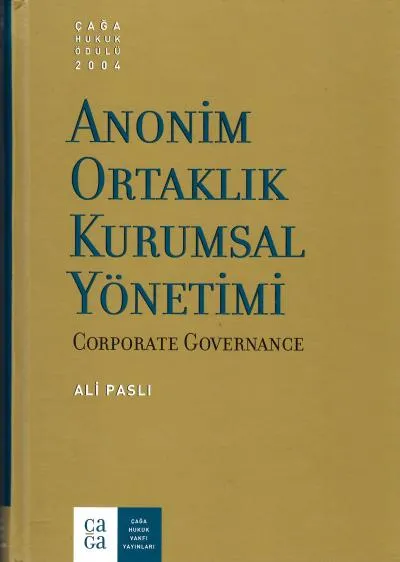
Authors: Corporate Law Department, Prof. Dr. Ali Paslı, Attorney Mustafa Şahin
Introduction
Joint stock companies are legal entities in which the functions of capital and management are separated, requiring a delicate balance between managerial autonomy and legal responsibility. The board of directors determines the company’s strategic direction, exercises its representation authority, and, most importantly, assumes management responsibility. The legal liability of board members serves not only as a compensation mechanism but also as a concrete reflection of the principle of corporate governance.
Under the Turkish Commercial Code No. 6102 (“TCC”), this liability is regulated within the framework of breaches of the duties of care and loyalty and may be asserted by the company itself, its shareholders, or its creditors (Articles 553 et seq. of the TCC).
Pursuant to Article 553 of the TCC, members of the board of directors, executives, and liquidators are jointly and severally liable for damages arising from breaches of their statutory or contractual obligations caused by their fault. This provision explicitly demonstrates that liability is fault-based.
The legal nature of the relationship between the board members and the company has been interpreted differently in legal scholarship. One view considers this relationship similar to a contract of mandate, meaning that liability arises from breach of obligation. Another view argues that the obligations of board members stem directly from the law, therefore constituting a statutory liability.
In the precedents of the Court of Cassation (Yargıtay), liability is generally treated as tortious. However, Article 114/2 of the Turkish Code of Obligations provides that tort liability may also encompass contractual liability, meaning that both bases are often evaluated together in practice.
For the legal liability of board members to arise, four fundamental elements must coexist: illegality, damage, causal link, and fault.
4.1. Illegality
Board members will be liable for damages resulting from breaches of their duties arising from law or the articles of association as stipulated in Article 553 of the TCC. Such a breach may consist of violating a statutory provision or failing to exercise the care expected of a prudent manager (Article 369 of the TCC). Various obligations and prohibitions, the violation of which may lead to liability, are regulated in different provisions of the TCC (e.g., Articles 395/1, 395/2, 396/1-c1, 549, 552, 1524). Furthermore, even where not explicitly regulated, board members are subject to duties implied by the nature of their position.
4.2. Damage
For a claim for compensation to arise, actual or potential damage must exist. Damage may occur as a decrease in the assets of the company or a third party, or as a loss of expected profit. The existence of damage is a prerequisite for liability; without damage, there can be no liability.
4.2.1. Direct Damage
Shareholders and creditors have the right to bring a claim under Article 553/1 of the TCC to recover direct damages suffered due to the reduction of their assets or the failure to obtain expected profits. In such actions, the claimant requests that compensation be paid directly to them.
4.2.2. Indirect Damage
The reduction in the company’s assets, which constitutes a direct loss for the company, is considered an indirect loss for shareholders and creditors. Shareholders may request that compensation for such indirect loss be paid to the company rather than to themselves. Creditors who suffer indirect loss due to the company’s direct damage may file a claim only if the company has gone bankrupt, and even then, the compensation is payable to the company (Article 556 of the TCC).
4.3. Causal Link (Causation)
There must be a direct causal connection between the damage and the unlawful act of the board member. The causal link is determined independently of fault and is often established based on expert reports.
4.4. Fault
The final element required for liability is fault. Board members are liable for acts or omissions causing damage to the company only if it is proven that such acts or omissions result from their fault.
4.4.1. Principle of Differentiated Joint Liability
Joint and several liability means that multiple persons are collectively and individually responsible for the same obligation, allowing the creditor to claim the entire or partial amount of the debt from any one or more of them. Once one debtor pays, the others are discharged to the extent of the payment.
However, the principle of differentiated joint liability introduced by Article 557 of the TCC departs from this absolute model. Under this regime, each board member is liable only in proportion to their fault and contribution to the occurrence of the damage. In other words, while liability remains joint in nature, each member’s share of responsibility is limited to their degree of fault, and individual mitigating factors may be asserted in external relations. The court, when rendering judgment, will determine the liability of each member according to their respective level of fault.
For direct losses of the company and indirect losses of shareholders and creditors, actions may be brought by:
For direct losses of shareholders or creditors (Article 553/1 of the TCC):
The limitation period is two years from the date the damage and the responsible person become known, and five years from the date of the act. If the act constitutes a criminal offense, the longer criminal limitation period applies (Article 560 of the TCC).
6 .Exemption from Liability
Pursuant to Article 553/2 of the TCC, if board members delegate their statutory duties or authorities to another person in accordance with the law, they shall not be liable for the acts or decisions of such persons unless it is proven that they failed to exercise due care in selecting them.
Conclusion
The legal liability of board members lies at the heart of corporate governance in Turkish joint stock company law, particularly in terms of accountability and transparency. The regime introduced by Articles 553 et seq. of the TCC aims to ensure that board members perform their duties prudently, diligently, and loyally, thereby safeguarding the company’s interests.
The emergence of liability requires the coexistence of four elements: illegality, damage, causation, and fault. The distinction between direct and indirect damage determines who may bring an action and to whom compensation is payable: in cases of direct damage, shareholders or creditors may sue in their own name, whereas in cases of indirect damage, the right of action belongs to the company—shareholders may claim on behalf of the company, and creditors may do so only if the company is bankrupt. Thus, the TCC establishes an integrated liability model centered on the company’s interest while protecting secondary interests within that framework.
The principle of differentiated joint liability under Article 557 represents a modern approach, limiting each board member’s responsibility to their degree of fault and moving away from the traditional model of absolute joint liability. This does not abolish solidarity but renders it relative, maintaining joint responsibility while calibrating it according to individual fault.
Moreover, the duties of care and loyalty not only define ethical standards of behavior but also serve as benchmarks for assessing the legality of board decisions. Board members are obliged to observe an objective standard of care, avoid conflicts of interest, and protect the long-term interests of the company during the decision-making process.
Stay Up-to-Date with Current Information